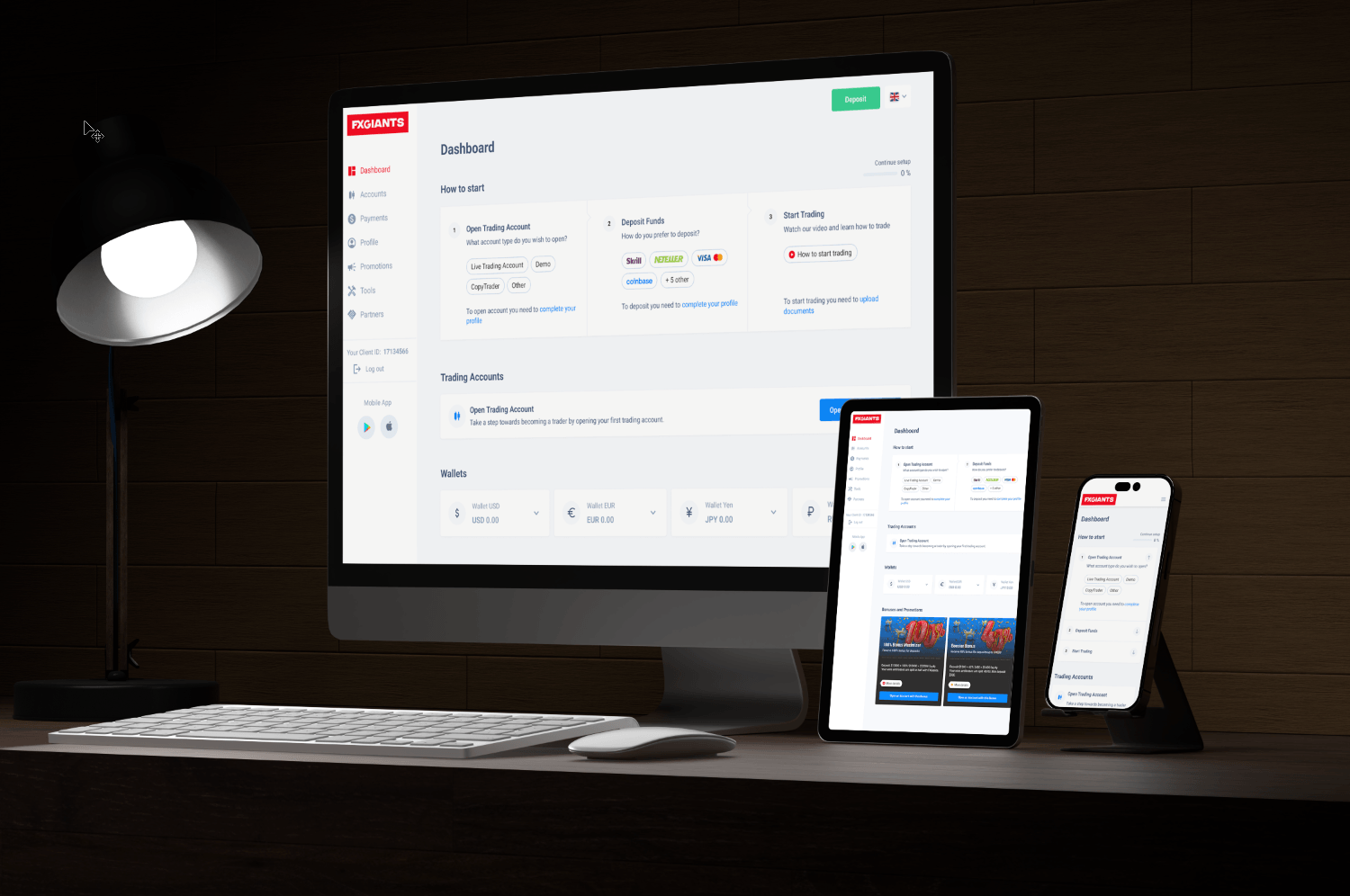
A multi-surface trader dashboard designed to walk new clients from sign-up to first trade. Built around the three jobs they actually have to complete: open an account, fund it, start trading — without losing them in between.
FXGiants serves retail forex and CFD traders. New clients arrived motivated and often left before placing a single order — stuck somewhere between account opening, funding, and the actual trading terminal.
I led the redesign of the new-client dashboard: the screen people see between signing up and trading. The brief was to convert sign-ups into funded, trading accounts. Everything we did was measured against that single funnel.
We instrumented the funnel and watched 90 days of new-client behaviour. The dashboard wasn't bad — it was just passive. Users landed, looked around, and left without completing the next step. Nothing pulled them forward.
Account opening completion was 78%. Funding completion dropped to 41%. First trade was 24%. The dashboard sat right in the middle of those drop-offs.
Showing all wallets, all promotions, all options at once felt overwhelming. Users wanted: "what should I do next?"
Users hesitated to deposit before they'd confirmed the platform was real. We added social proof and platform-stability cues to the funding screen.
Funding and KYC mostly happen on desktop or tablet. Mobile is for "is my account ready yet?" — a one-glance check.
We turned the dashboard into a guided sequence. At any moment, the user sees their next single action at the top of the screen, with the full menu still available below for power users. The next action updates automatically as steps complete.
Trading UI is risk UI. Even a "marketing" dashboard for new traders is a regulated surface. Every promotion, every bonus, every CTA gets reviewed by Compliance. Pulling them into the design loop early saved weeks of rework.
Default to one action. The temptation in dashboards is to surface options. The right move in onboarding is to surface the option, and let users find the rest if they want it.
Match density to device. Desktop traders want everything on screen. Mobile traders want a glance. Building the same content at three densities — with the design system to back it — was more useful than three bespoke layouts would have been.