A white-label card payment SDK with SCA / 3DS2 compliance, native one-handed mobile UX, and a token-based theming system that lets merchants ship their own brand without breaking accessibility or conversion.
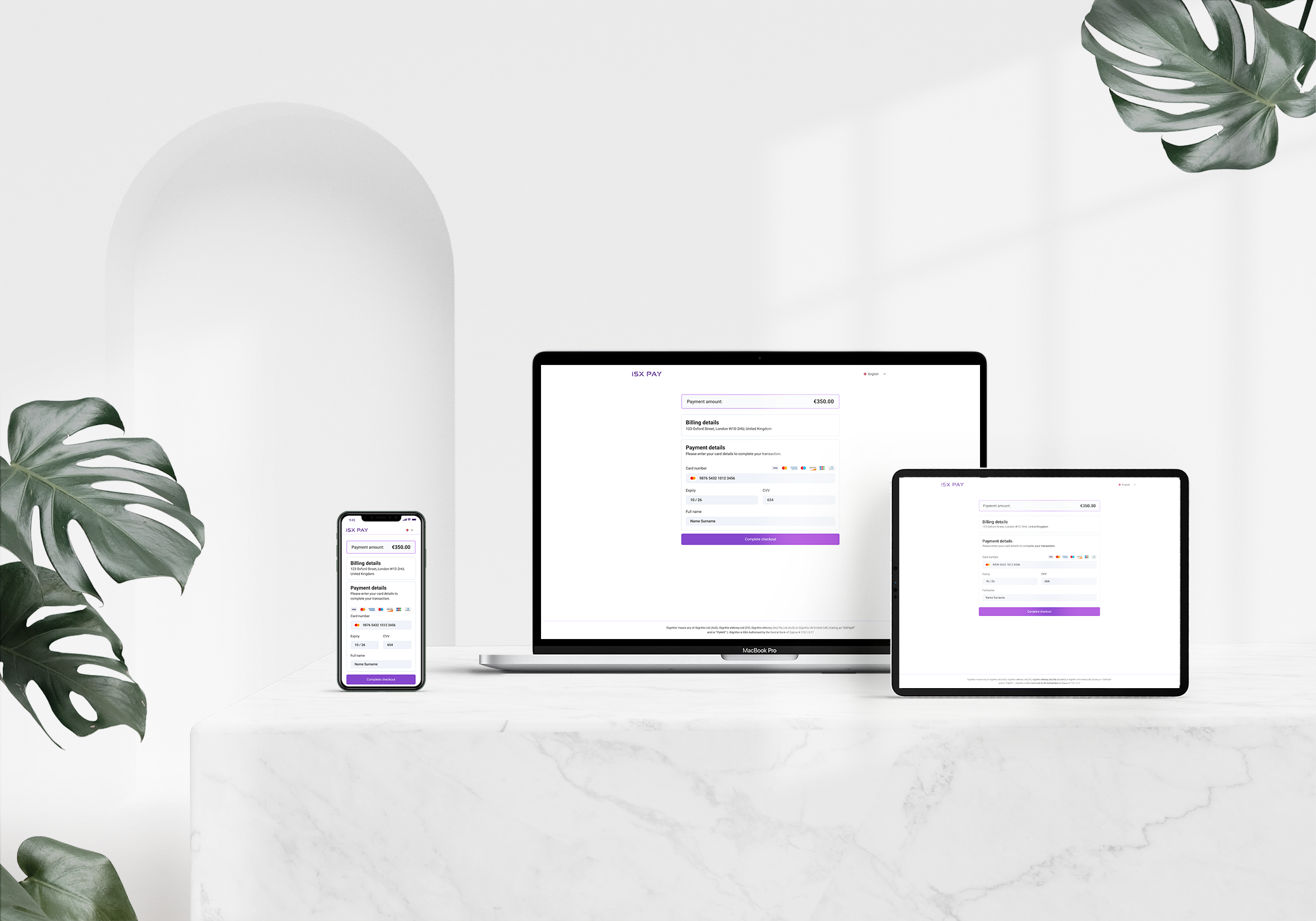
iSX Pay is a checkout SDK. Merchants drop it into their app or website with a few lines of code and it handles everything from card capture to 3DS2 SCA. To them, it should feel native. To their customers, it shouldn't feel like anything at all.
I led design from a brief that came in as "a card form" and ended as a themeable, SCA-compliant, multi-locale checkout system used across 800+ merchants in seven countries.
Strong Customer Authentication ejects users into a bank-controlled 3DS challenge. We had ~6 seconds to set expectations before the redirect, and ~6 seconds after to confirm success.
Card forms are notoriously bad on mobile — numbers, expiry, CVV, postcode, all on a 360px screen. We rebuilt the form for thumbs, with keyboard switching and intelligent autofill.
Merchants want their colors, fonts, and tone. But the checkout has to remain trustworthy and accessible. We resolved this with a constrained token system, not a free-for-all theming API.
Declines, soft fails, retries, expired sessions — designed each error state with copy that helps users recover rather than rage-quit.
We cut the checkout to its absolute minimum: amount, card number, expiry, CVV, and full name. Billing address surfaces only when required by the issuer's BIN rules. The SCA challenge gets its own pre-emptive screen ("Your bank may ask you to confirm — we'll bring you right back").
Constraints are the product. Merchants thought they wanted infinite theming. They actually wanted a checkout that converted. The constrained token system became one of the most-cited reasons partners chose iSX Pay over competitors.
Documentation is design. The SDK's integration docs are the first surface a developer sees. I co-owned the docs with a tech writer — design principles, code snippets, theming examples, accessibility notes all in one place.
Test in the wild. No focus group surfaces the bug that only happens on a 4.7-inch Android Chrome with autofill on a saved card. Production analytics, session replay (privacy-safe), and a beta merchant program were the only way to find the long-tail issues.